
Research
Overview
The Cancer Therapeutics Research Laboratory (GI) is led by Prof Gopalakrishna Iyer (Head and Neck Surgeon, National Cancer Centre Singapore). The group is part of the National Cancer Centre Singapore (NCCS) research ecosystem and is focused on advancing translational cancer research with a strong emphasis on head and neck and thoracic malignancies.
The central mission of the lab is to improve patient outcomes by identifying novel therapeutic targets, prognostic biomarkers, and rational treatment strategies that can be translated directly into clinical practice. A key philosophy of the group is “bedside-to-bench and back to bedside” research, where clinical observations directly inform laboratory investigation and vice versa.
The lab integrates multi-dimensional tumour profiling approaches, including genomics, transcriptomics, single-cell sequencing, and immunophenotyping, to understand tumour heterogeneity, evolution, and therapeutic resistance. These efforts are complemented by the development of patient-derived models such as primary cell cultures and organoid systems, which are used to study drug response and resistance mechanisms in a clinically relevant setting.
A major focus of the group is precision oncology in head and neck cancer, including oral cavity, oropharyngeal, and nasopharyngeal cancers. The lab has contributed to large-scale molecular profiling studies and clinical-translational programs aimed at matching patients to targeted therapies through molecular tumour boards and prospective sequencing initiatives.
In parallel, the laboratory works closely with clinical trial units and multidisciplinary oncology teams to support adaptive and biomarker-driven clinical studies. This includes efforts to refine patient selection strategies for novel therapeutics, immunotherapy approaches, and combination regimens aimed at overcoming drug resistance.
Beyond head and neck cancer, the group also collaborates across NCCS and national research platforms to study other solid tumours, including lung and hepatobiliary cancers, with a shared goal of accelerating the development of more effective and individualized cancer therapies in Asian patient populations.
The lab is also actively involved in national and international collaborative initiatives in precision oncology, contributing to the development of translational pipelines that integrate genomic data, clinical annotation, and functional validation to guide real-world treatment decisions.
Patient-derived tumor explants (PDTE) and functional cancer modeling
Mechanically stabilized patient-derived tumor explants for functional precision oncology
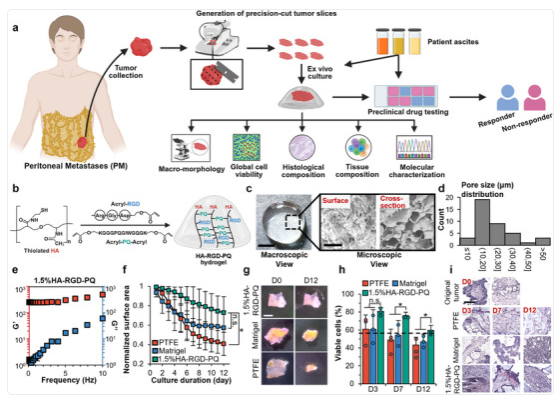
Description:
Patient-derived tumor explants (PDTEs) provide a powerful platform for functional interrogation of human cancers, preserving native tumor architecture and microenvironmental complexity. However, conventional explant systems are limited by rapid tissue contraction, loss of stromal organization, and declining viability, restricting their use for longitudinal drug testing. To overcome these limitations, we developed a hydrogel-based culture system using hyaluronan (HA)-derived matrices with tunable mechanical properties that mimic the native tumor microenvironment. This system stabilizes tumor architecture by modulating cytoskeletal tension and suppressing early contraction responses, enabling sustained culture of clinically derived tumor tissues. Single-cell and spatial analyses demonstrate that hydrogel-stabilized explants retain tumor epithelial cells, stromal populations, and immune infiltrates with preserved transcriptional programs and intercellular signaling networks. Importantly, these models maintain functional responsiveness to pharmacologic perturbation, enabling more physiologically relevant drug response assessment compared to conventional explant systems. This platform establishes a mechanically engineered tumor ecosystem that extends the viability and analytical utility of patient-derived tissues, supporting applications in precision oncology, tumor microenvironment research, and therapeutic response prediction.
Publication(s):
(2025) Patient-derived tumor explant hydrogel platform for functional precision oncology
Team members:
Gopalakrishna Iyer, Cancer Therapeutics Research Lab, NCCS Singapore
T cell single-cell RNA sequencing in head and neck cancer
Single-cell dissection of T cell dysfunction and immune evasion in head and neck cancer
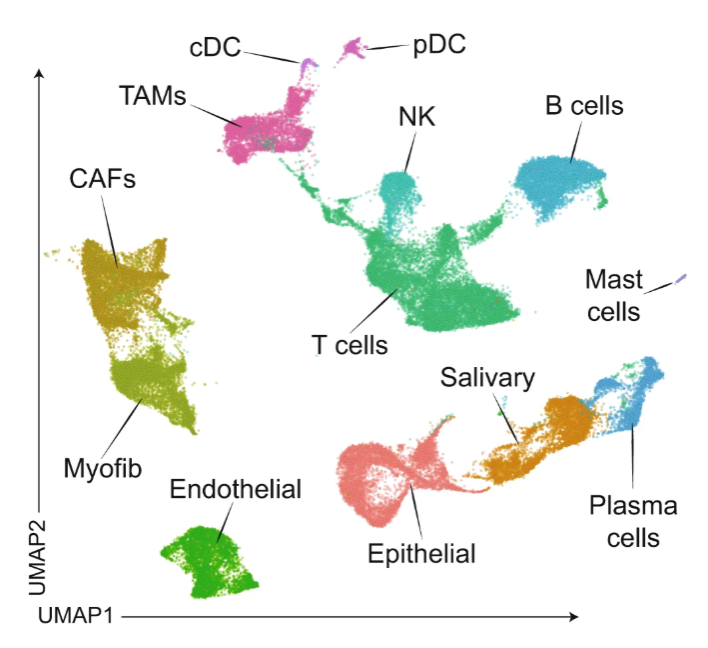
Description:
Head and neck squamous cell carcinoma (HNSCC) is characterized by a highly heterogeneous and immunosuppressive tumor microenvironment. To better understand immune dynamics during tumor progression and metastasis, we performed single-cell RNA sequencing (scRNA-seq) of primary tumors, lymph node metastases, and matched tissues from patients with HNSCC. This study constructed a high-resolution cellular atlas of the tumor ecosystem, with a particular focus on tumor-infiltrating CD8+ and CD4+ T cells. Trajectory and clonal analyses revealed distinct developmental states of T cells, including progressive exhaustion programs associated with chronic antigen exposure and tumor progression. Exhausted T cells exhibited divergent differentiation paths linked to distinct transcriptional and metabolic states, highlighting heterogeneity within dysfunctional immune populations. Integration of tumor and immune compartments uncovered coordinated interactions between malignant cells and T cells, including ligand–receptor networks associated with immune suppression and metastatic progression. These findings identify key regulatory pathways driving T cell dysfunction and provide mechanistic insight into immune escape in head and neck cancer. Overall, this work defines the transcriptional and functional landscape of T cell states in HNSCC and establishes a framework for understanding immune evasion and for guiding future immunotherapeutic strategies.
Publication(s):
Team members:
Hong Sheng Quah, Elaine Yiqun Cao, Lisda Suteja, Constance H. Li, Hui Sun Leong, Fui Teen Chong, Camille Arcinas, John F. Ouyang, Daniel S.W. Tan, Subhra K. Biswas, Owen J.L. Rackham, N. Gopalakrishna Iyer
Extracellular vesicle–based co-therapeutic targeting of EGFR-driven squamous cell cancers
Extracellular vesicle delivery of EGFR isoform D as a co-drug strategy for enhancing tyrosine kinase inhibitor response in squamous cell carcinoma
Description:
Resistance to tyrosine kinase inhibitors (TKIs) remains a major challenge in the treatment of EGFR-driven squamous cell carcinomas. This study investigates a novel therapeutic strategy leveraging extracellular vesicles (EVs) engineered to carry EGFR isoform D as a biologically active payload to modulate EGFR signaling dynamics and enhance drug sensitivity. We demonstrate that EV-associated EGFR isoform D can reprogram receptor signaling networks in recipient cancer cells, altering downstream pathway activation and sensitizing tumor cells to TKI treatment. This co-therapeutic approach shifts EGFR signaling from a resistant state toward a more drug-responsive configuration, providing a functional strategy to overcome adaptive resistance mechanisms. Mechanistically, EV-mediated delivery impacts receptor-level signaling heterogeneity and modifies downstream proliferative and survival pathways, resulting in enhanced therapeutic efficacy when combined with standard EGFR-targeted inhibitors. This work establishes extracellular vesicles as programmable biological drug carriers and introduces a combinatorial therapeutic framework integrating vesicle-mediated signaling modulation with targeted pharmacologic inhibition for precision oncology applications.
Team members:
SY Toh, HS Leong, FT Chong, DM Rodrigues-Junior, XL Kwang, DPX Lau, PH Lee, AL Vettore, BT Teh, DSW Tan, N Gopalakrishna Iyer